
Resources
A compilation of books and documents to support your learning.
Motivational Interviewing is our core text and is best to read and digest first. Please email Steve Dickens at steved@investeap.org to obtain a copy of either book.
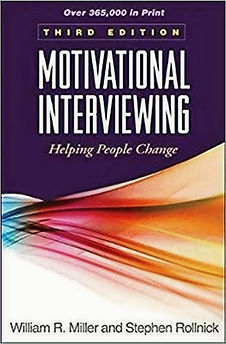
This bestselling work for professionals and students is the authoritative presentation of motivational interviewing (MI), the powerful approach to facilitating change. The book elucidates the four processes of MI--engaging, focusing, evoking, and planning--and vividly demonstrates what they look like in action. A wealth of vignettes and interview examples illustrate the "dos and don'ts" of successful implementation in diverse contexts. Highly accessible, the book is infused with respect and compassion for clients. The companion Web page provides additional helpful resources, including reflection questions, an extended bibliography, and annotated case material.
This book is in the Applications of Motivational Interviewing series, edited by Stephen Rollnick, William R. Miller, and Theresa B. Moyers.

Problem-solving therapy (PST) has been increasingly used to treat a variety of health and mental health problems due to its flexibility and proven effectiveness. This text, written by the co-developers of PST, is a comprehensive and detailed manual of how to apply PST to a wide variety of populations and situations. It reflects the significant conceptual and clinical revisions that supersede earlier versions of PST, and is based on the authors' clinical and research experience, the treatment outcome literature, and advances in related areas of psychology and neuroscience research.
The book offers specific treatment guidelines, sample client-therapist dialogues, clinical exercises and activities, homework assignments, client handouts, clinical case examples, and worksheets. These resources are based on a "stepped-care" model of PST that takes into account the nature of a client's problems, the intensity of these problems, the setting and treatment structure, and treatment goals. The manual offers clients four major "toolkits," which include a multitasking guide to overcoming "cognitive overload" when under stress, a guide to overcoming problems related to emotional dysregulation, a guide to overcoming barriers to effective problem-solving through use of healthy thinking and positive imagery, and a guide to fostering effective problem-solving by designing and employing a rational plan. Digital accompaniments include patient handouts, worksheets, and toolkits. Intended for use by a wide variety of mental health professionals in multiple settings, the manual can also serve as a text for both undergraduate and applied graduate courses.